






Unsung Songster
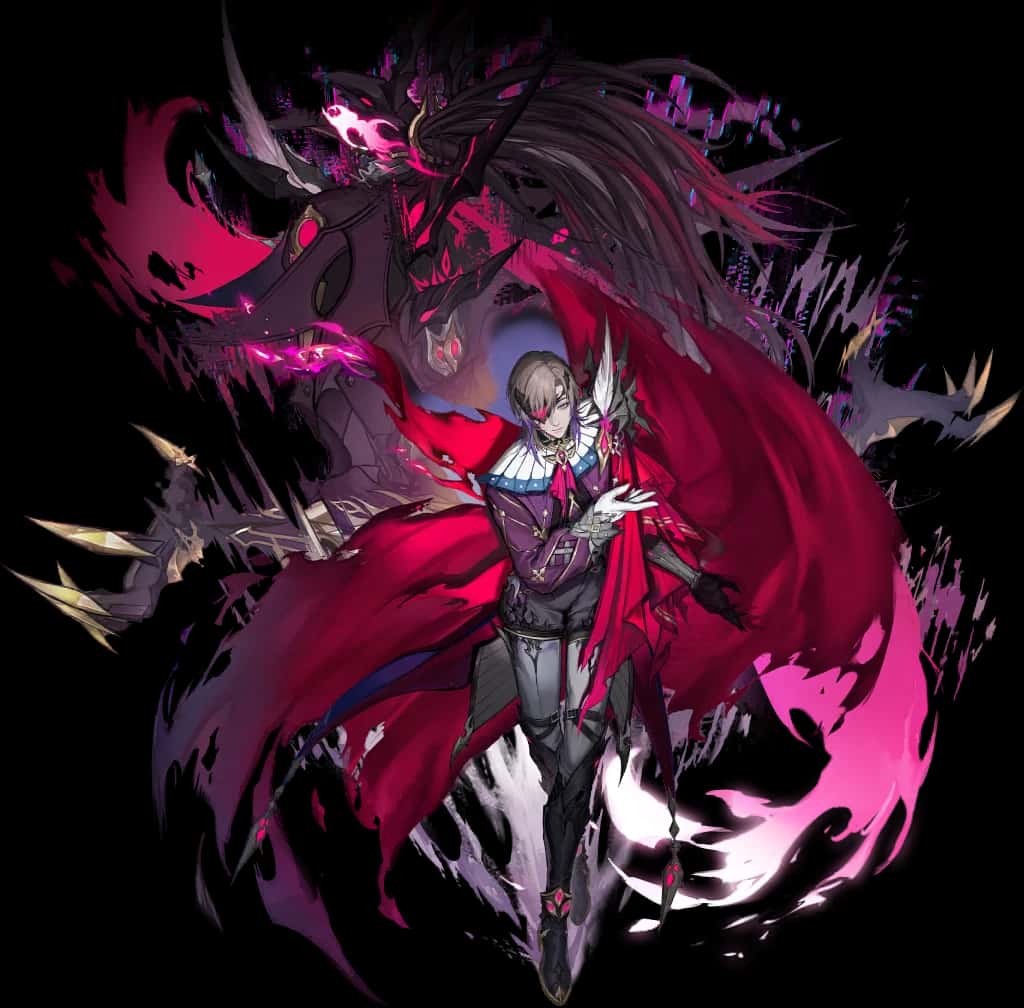
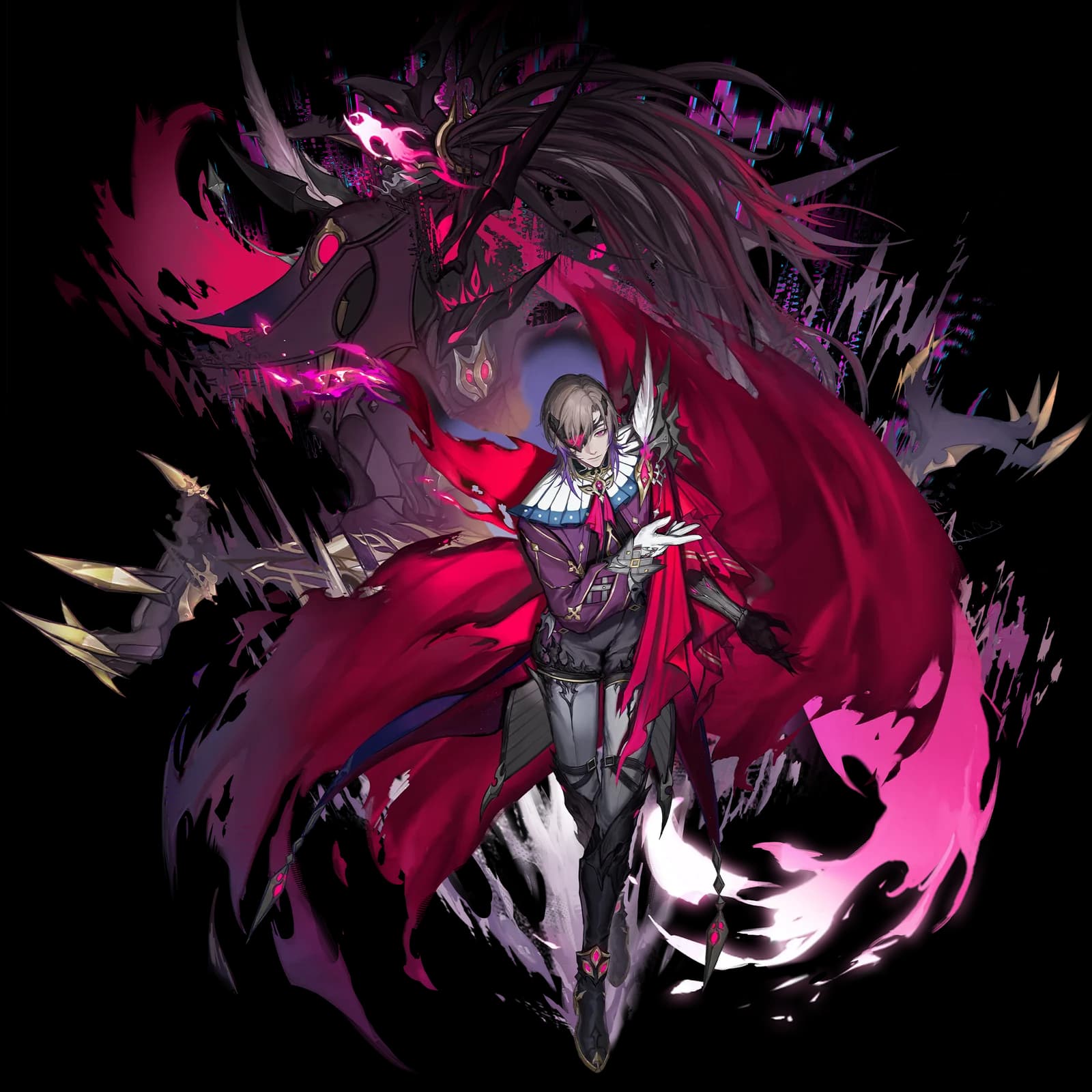
Phantasio
/ Umbro
Greatsword / Shotgun
Introduction
Phantasio is a 5-star Umbro character in Duet Night Abyss. Phantasio's weapon type is Greatsword / Shotgun and role is DPS. Affiliation: Unaffiliated.
On the combined Duet Night Abyss tier list Phantasio is B tier, 13th of the 26 characters ranked, from where 10 community tier lists put Phantasio.
Other Umbro characters in Duet Night Abyss: Berenica, Flora and Vita (Umbro).
What Phantasio does
 Curtain Up starts Bestial Fury: weapons are locked, melee becomes four-hit Furious Claws, ranged becomes an energy beam called Mournful Howl, and Sanity drains until it runs out. During Bestial Fury, ATK scales off Max Sanity and
 Recitativo becomes Aria, a dash that adds Skill Range and hitstun immunity.
Filling Immersion in that state pushes Phantasio into Bestial Fury: Devotion.
Profile
Phantasio carries the title "Unsung Songster". Phantasio's birthday is October 9. Phantasio is voiced by 吕思衡 in Chinese, Jack Ayres in English, KENN in Japanese, and 장서화 in Korean.
Stories
20Witness: Ⅰ
You stood on the balcony where Parsifal used to practice his singing.
Before there were heavy theatre curtains to separate him from the audience, this was his stage. Dawn served as his spotlight. The street below, his backdrop. Snow-laden wind, his orchestra. Birdsong, his harmony.
Though the floor had been swept clean, a single wild sprout had pushed its way up between the tiles, perhaps whoever came to tend the place hadn't the heart to pull it out. You brushed your fingers gently across its blade, as if to offer a silent wish: May you grow strong, for the one who no longer can.
Anecdote: Ⅰ
On a quiet street in the southern outer city of Icelake, a woman who ran a small bakery was still waiting for one of her regulars to return.
More than a decade ago, she had no storefront, just a humble stall set up on that same street. Every morning, as she prepared to open for the day, she would hear the silvery, ringing voice of a child singing from one of the upstairs windows. Though she never saw the one who sang, she came to think of that child as an unseen companion, someone who, like her, was greeting the morning with effort and hope. Whenever she grew weary or close to giving up, just hearing that voice was enough to keep her going.
One day, the woman noticed that the song from upstairs sounded different. Though no musician herself, she could hear the change, the notes felt distracted, uneven, as if something weighed heavily on the child's heart. It continued for several days. Then one morning, the child's singing broke off mid-note, followed by a sudden sharp cry. Startled, the woman rushed upstairs, only to run into a flustered Charon boy.
"Ma'am, my mother, she's fainted! Please, we need help... please!" the boy stammered, barely able to form his words.
She froze for a beat. That voice, she recognised it immediately. There was no doubt: this boy was the singer, the unseen companion whose voice had greeted her morning after morning.
Gathering herself quickly, she helped the boy bring his mother to a nearby clinic. With treatment, the woman's condition stabilised, though the boy refused to leave her bedside. Seeing he hadn't eaten all day, the baker returned to her stall, filled a basket with bread, and brought it to the clinic.
"Thank you... thank you so much, ma'am," the boy said again and again. "I, I don't even know how to repay you."
"Just call me Auntie Horrel," the woman replied with a smile. "And no need to thank me, you've helped me plenty, too."
The boy blinked in confusion.
"Thanks to you," she said, "I've had free opera performances every morning. I've been meaning to tell you, child, you sing beautifully."
"Th, Thank you, Auntie Horrel!" the boy stammered, surprise flashing across his face, along with a trace of shyness. "But... my mother always said we shouldn't accept kindness without giving something in return."
"Then next time," the woman chuckled, "just come and buy a piece of bread at my stall."
It had been an offhand remark, something she'd said without thinking. Yet from that day onward, the boy really did start coming down every few days to buy a piece of bread. Through small exchanges, Auntie Horrel gradually learned more about him. He had never known his father. For as long as he could remember, it had always been just him and his mother. She had been frail for years, but recently, her health had begun to decline more rapidly.
Auntie Horrel prayed quietly for the boy and his mother. Yet the boy's singing never returned to what it once was. No matter the tune, a thread of sorrow was always woven through it. Listening to his voice, she often found herself overcome with quiet sadness. There was little she could do to help, so she did what she could, each day, setting aside the softest, fullest loaf she had, saving it just for him, hoping that its simple warmth and sweetness might ease, even if only a little, the sorrow he carried.
Then, one day, the singing stopped. And the boy no longer came to buy bread.
Many days passed, until Auntie Horrel happened to catch sight of him again, walking down the street, hollow-eyed and lost in thought. She called out to him at once.
"Why don't you sing anymore?" she asked gently.
"My mother passed away," he replied. His voice was dry, brittle. "I used to sing to make her happy... but now that she's gone..."
Auntie Horrel fell silent for a moment. Then she placed a warm bag of bread into his hands.
"Your mother once told me," she said, "that she hoped you'd grow up to sing on a real stage someday. A bright one, where everyone could hear your voice. Even if she's not here anymore... you can still make that wish come true."
The boy looked up, a faint light stirring in his eyes.
In truth, the woman had only met his mother a handful of times. She remembered only a reticent figure who always kept her face hidden beneath hats and veils. But none of that mattered now. The only thing she could offer the boy, was one small lie, told with kindness.
The next morning, his singing returned. Perhaps because it had been silent for so long, it now carried a deeper strength, and a greater tenderness, than ever before.
Year after year, the snows of Icelake fell and melted again. The boy grew into a young man, and the woman's humble stall became a proper bakery. One ordinary morning, just before opening time, someone knocked at the shop door.
"Auntie Horrel, I'll be away for a while," the young man said, handing her a small pouch of coins and a house key. "I've enlisted in the Legion. While I'm gone... could you look after my home?"
"Of course. But I can't take your money," the woman said softly, pushing the pouch back towards him. "You're living all on your own, you'll need it far more than I will. But why the Legion? Aren't you going to sing anymore?"
"I want to earn my place as a Laurelled Charon. That's the only way I'll ever stand on a real stage," he explained, nudging the pouch back towards her. "Please take it. I can't accept your help for nothing."
"Then repay me when you come back," she said, handing him the loaf she'd already set aside, the softest, as always. "When you make it big, come and be the face of my bakery, alright?"
"If you'd have me..."
"Then it's a promise." She waved him off with a warm smile. "May your dream come true, Parsifal."
Secret: Ⅰ
Parsifal had known from a young age that he was a "bastard child" something all too common in the outer city. Yet he never felt any shame about it. If anything, he was quietly proud to bear his mother's surname.
Reminiscence: Ⅰ
I was born in the outer city, into what you'd probably call an ordinary household, though in truth, it wasn't all that ordinary. I never knew my father. My mother raised me on her own.
Before she grew too sick to leave her bed, I remember her as full of energy. She worked cleaning and tending to the Galea Theatre, arranging the scenery, sweeping the seats, checking the lights and fittings, whatever needed doing. Because of her job, she heard every kind of opera there was. And when she came home, she'd sing. She loved singing. Whether she was resting or scrubbing the floors, there was always a tune on her lips. Simply by being there, listening day after day, I started to sing along with her.
We lived a modest life, but with music always in the air, somehow, it felt like enough. Until she fell ill. I can't remember exactly when it began, but I do remember that winter. It was one of the coldest winters in my memory, and her health suddenly took a sharp turn for the worse. Before, a few days' rest would be enough for her to recover. But that time, even as the snows melted and spring returned, she remained bedridden. The doctor said it was the result of a frail constitution and the wear and tear of years spent working too hard. There was no cure. All we could do was let her rest, and hope for the best.
With Mother no longer able to work, the strain at home grew heavier with each passing day. One day, she called me over, her voice more serious than I had ever heard. She asked me to bring out a box from under the bed, one I had never seen before. It looked far too fine, far too out of place in our modest home. I was even more taken aback when I opened it:
Inside were a few pieces of ornate jewellery, each one looking far more valuable than anything we had ever owned. And at the centre of it all, nestled among the necklaces and bracelets, was a badge. Engraved upon it were the words "Laurelled Charon" and Mother's name. I realised then that her past might have been far more complicated than I had ever imagined.
"Take these pieces of jewellery and sell them," she said. "It should last us a while. But don't go by yourself, ask someone from the theatre to help. Otherwise, you might be taken advantage of."
I nodded and carefully took the jewellery from the box. There were letters in there too, quite a few, in fact, but she glanced over and simply told me to leave them and put the box away.
I didn't ask any questions. But she must have seen the curiosity in my eyes, because she spoke again: "Just some old things... from the days when I still lived in the inner city."
"Mother... were you rich?" I asked.
"If you mean in terms of money," she said, almost absently, as if dismissing some long-forgotten dream, "then yes. There were always gorgeous gowns in my wardrobe, and if one ever got torn or stained, I never minded. There were always new ones waiting. I had enough jewellery to wear something different every day. And if I fancied something new, I never had to buy it myself. I'd just mention it at a ball, and a few days later, someone would bring it to my door in a ribboned box. All I had to do was dance with them once or twice. If I hadn't left the inner city, the house would probably be filled with flowers and expensive tonics by now."
As she spoke, the last of the sunlight brushed across her face. She looked beautiful, worn thin by time, yet touched with a fragile grace. I couldn't read her expression. Was it nostalgia? Or regret?
"Mother... do you ever regret leaving the inner city?" I asked.
"Regret?" She smiled, and somehow, that smile made her look all the more fragile, all the more beautiful. "Those ten years I spent in the inner city... they were like soap bubbles in the sun, gleaming, shimmering, yet couldn't withstand a single touch. Sometimes I even wonder if they ever truly happened at all."
"But the days I spent after I left, the life I built here, every moment of it was real. I remember the day I first learned the layout of the theatre, and the moment I knew by heart where every tool belonged. I remember when I dressed the entire auditorium by myself. I remember the first callus on my hand, the first ache in my knees, and the first wrinkle at the corner of my eye." She reached out and touched my cheek. Her palm was roughened by time, but it carried nothing but warmth. "And I remember you, Parsifal. The first time you sang along with me. The first time you memorised an entire score. The first time you sang through a whole act without missing a note."
"I have never once regretted leaving the inner city." She looked into my eyes, her voice steady with quiet sincerity. "It was the best decision I ever made."
I don't know much about the inner city. I could never quite picture what life there might have been like. But I believe her. Even though Mother gave up many things, they were losses she had chosen, willingly, for a life that felt right to her. I want to live as she did: walking a path of my own choosing, with no regrets.
Witness: Ⅱ
Leafing through the scrapbook of an avid opera lover, you find an old poster. Where the lead performer's name should be, a strip of ornate tape lies neatly across the poster, carefully covering the name "Parsifal Snowfield."
The poster leaves the frost fairy unseen, a silent presence just beyond the frame, watching the children's world from afar. The perspective reminds you of the darkness behind the curtain in a theatre, how, when the stage lights come on, a sliver of brightness slips through the gap beneath the heavy velvet. To Parsifal, that stage was a distant world, one he could only glimpse through a thread of light.
And so, like the fairy in the story, he gave up everything, just to reach for that distant world.
Anecdote: Ⅱ
Not every play is a good one, and even the best have their dull moments. Audiences are drawn to scenes full of tension and dramatic turns, but when the story slows down, many let their minds drift. So it's only natural that performers tend to put more care into those brighter, more dramatic moments.
But Parsifal was different. His former mentor once recalled: even in the quietest, most overlooked scenes, he gave his full, unwavering effort. Part of it was discipline, of course. Parsifal was nothing if not diligent. But there was more to it than that. For him, even the most mundane moments on stage were glimpses of a life he could never quite reach.
"For most performers, acting is a job, or a passion, or maybe a dream," his former mentor said. "But for Parsifal... I think it was something as precious as life itself, or perhaps, something that had already become part of his life."
Secret: Ⅱ
Parsifal knew next to nothing about sewing, his mother had never once allowed him near a needle.
Gentle and kind as she was, there was a certain stubbornness to the way she raised her son, one few outsiders ever truly understood, Though their household was far from wealthy, she insisted on giving him the polish and bearing of a nobleman's heir: poise, elegance, and a proper upbringing. She spent long hours teaching him literature, music, and even dining etiquette, things most of their neighbours dismissed as useless, even laughable. And so, he grew up scarcely knowing how to cook, to wash clothes, or to mend a torn hem, ordinary skills his mother deliberately kept him from learning.
Reminiscence: Ⅱ
I still remember the first time Mother took me to the theatre. It was early spring, and for once, Icelake had a clear sky. The snow had melted, and the streets smelled fresh and clean. She held my hand as we walked.
"Mother, what's a 'theatre'?" I asked.
"It's where people perform operas," she said. "An opera is... well, people take on roles from a story, and instead of just acting, they sing it."
"Like when you and I sing together at home?"
"Something like that, but not quite. You'll understand once you see it," she said with a warm smile.
As a child, the theatre was the most magnificent building I had ever seen. Outside the grand entrance, elegantly dressed men and women stepped down from velvet-lined carriages. I felt like a shepherd boy who had stumbled into a palace.
Mother led me through a side door and introduced me to Madam Putsch, head of the Magic Flute Troupe. They seemed like old acquaintances, Madam Putsch had been the one to help my mother find her job. While they spoke, a beautiful woman peeked through the backstage door, then, in a flash, she was right in front of me, vigorously ruffling my hair.
"Aww! What a charming little gentleman! You must be Herzeleide's boy, right? Look at those eyes, you're the spitting image of your mother!"
That was the first thing Miss Violetta, who would later become my mentor, ever said to me. To be honest, I didn't think much of her at first. She seemed overly theatrical, and ruffling my hair without even asking first felt incredibly rude. The rest of the troupe struck me as strange too. Feeling out of place, I tucked myself into a corner of the lounge as soon as my mother started working, and sat there quietly on my own.
I didn't know how long I'd been asleep before Madam Putsch woke me. She told me the day's performances were over, and that only the troupe was left in the building. I was free to wander the stage and the auditorium if I liked. Truth be told, all I really wanted was to crawl back into my corner and go on sleeping. But it felt rude to turn down her kindness, so I dragged myself towards the stage.
Somewhere beyond the stage, a faint song began to drift through the air. I remembered what my mother had said, about people singing stories instead of just acting them. Could this be opera? I followed the voice, step by step, as it grew steadily clearer, until at last, only a curtain remained between us.
Later, I would learn it was the main stage drape, not just any curtain.
Curious, I tugged the curtain aside, and brilliant light spilled across my face, dazzling me. There she was, Miss Violetta, standing alone in the spotlight. But... was it really her?
As she moved gracefully around the stage, a living forest seemed to take shape in the empty space:
She lifted her hem and tiptoed forward, like crossing a babbling brook.
When she ducked her head and brushed aside her hair, it was as if a low branch had caught playfully at her curls.
She raised two fingers to her lips and winced, as if tasting a wild, tart berry.
And when she smiled tenderly with quiet wonder and reached out her hand, it was to greet a deer hidden among the trees.
Her clothes hadn't changed, nor had her face. She was still that same abrupt woman who had tousled my hair without so much as a by-your-leave. And yet, standing there, I could have sworn she was someone else entirely.
"Oh?"
Her eyes caught on me. She approached, her steps light and graceful. Bending low, she drew the curtain wider, bringing her face level with mine. "Are you lost, sweetheart? The forest can be a dangerous place. Let me show you the way out."
"Are you... Miss Violetta?" I asked hesitantly.
She widened her eyes in confusion, and shook her head.
"You've mistaken me for someone else. I'm White Rose. I live in a windmill cottage, east of the forest, west of the lake."
My mother had taught me to sing for as long as I could remember. But it was then, hidden behind the curtain, that I first dreamed of becoming an opera performer.
Witness: Ⅲ
You find a faded recruitment notice for the 6th Legion pinned to a bulletin board in a quiet corner of Icelake.
Most of the text, the eligibility requirements, the testing procedures, had been worn away by rain and wind, but one line remained perfectly clear: "Outstanding candidates will be awarded the title of Laurelled Charon." It was promises like these, shining, beautiful, and false, that lured one aspiring youth after another into the maw of hell.
To Parsifal, soldiering and performing alike were simply professions: paths where hard work would be rewarded, where effort would bear fruit. That was the world he must have envisioned when he first read the notice, one where dreams could be earned.
Anecdote: Ⅲ
The banquet had begun.
Under the dazzling lights, the wineglasses in people's hands and the jewels on their gowns shimmered like tiny lanterns, scattering golden reflections across the banquet hall. As with all gatherings of its kind, the room pulsed with the worship of wealth and the hunger for status, gilded over with empty courtesies and polished flattery. And yet, amid all the glitter and pretence, a fairytale romance was quietly about to unfold.
It was his first time attending a banquet of such grandeur. He was dressed impeccably, his manner carefully composed, yet the unease in his eyes and the stiffness in his posture betrayed him. Young and sharp, he was a self-made businessman whose fortune in the steel trade had finally earned him a seat among the city's elite. Yet no tailoring could mask the humble roots he wore so plainly, and everyone in the hall, himself included, could see it. Eyes followed him with quiet amusement. Polite smiles met his greetings, just a shade too condescending, only to give way, behind his back, to snickers over his outdated taste and clumsy small talk. After being coaxed by a sharp-tongued noble into downing three glasses of biting spirits, he quietly slipped into a shadowed corner and murmured a request for a glass of plain water.
She was a darling of the inner city's social scene, no stranger to banquets like this. She navigated the endless stream of admirers with practised ease, making each one feel like the only one. With a few carefully chosen words, she even managed to calm two young gentlemen who had nearly come to blows over her. From the corner of her eye, she caught sight of a baron, the same one who had given her an extravagant necklace only a few days earlier. He was with another woman now: young, beautiful, someone she didn't recognise. It hardly surprised her. In the eyes of these nobles, she was no different from a fine porcelain vase, expensive, ornamental, replaceable. Crack it, stain it, grow bored of it, and there would always be another. But unlike a vase, she could do what no ornament ever could, speak, and smile. With grace, wit, and charm, she could always make herself sought after again. It was a game she played to perfection, and always won. Just as she gathered her skirts, poised to rejoin the game with all her polished art, a sudden wave of dizziness caught her off guard. Perhaps it was the wine she had just downed. She turned towards the refreshment table instead and caught sight of a plate of freshly sliced lemons. She picked one up, a small habit of hers. A sharp jolt of sourness always helped to clear her head.
To avoid staining her white gown, she popped the whole lemon wedge into her mouth. When she looked up, she found the man staring at her, water glass in hand, utterly bewildered.
"...Isn't that sour?" he asked.
She could only nod, cheeks puffed full, and managed a muffled "Mhm."
"Then why eat it?"
She tapped her temple lightly, meaning to say: to wake herself up.
The man stared at her for a moment, it was hard to tell whether he understood or not. But then, he picked up a wedge himself, mimicked her exactly, and the instant he bit down, his features twisted into a full, miserable grimace.
She chuckled softly, covering her mouth with a handkerchief as she gracefully spat out the rind. Then, with practised composure, she asked, "Feeling a bit more awake now, sir?"
"Y, Yes... thank you, miss. You're... very beautiful," he stammered, nearly choking on his water. The words could easily have sounded like sarcasm, but to her, they were the most sincere thing she had heard all evening.
"My name is Herzeleide Snowfield," she said. "I don't believe we've met. And you are?"
"Morris Glenville. I'm a merchant."
"A merchant?" she echoed, tilting her head slightly, her gaze curious but free of the slightest condescension. "And what kind of trade are you in?"
He smiled. "A bit of everything. Though lately, I've been thinking of trying fruit imports, maybe something a little less sour than these."
She laughed. And so did he.
And so, in a hall of blinding splendour, two kindred souls found each other, in a corner softened by shadow, where the gilded light could not quite reach. Like a lemon sinking into a glass of water, the bitterness softened, just enough to leave a hint of sweetness.
Fairytales are fairytales because they end just in time, while the illusion of "happily ever after" still holds, shielding the reader from the ugly truth that waits beyond the beauty. Once the curtain falls, all that remains is the cold weight of reality.
Secret: Ⅲ
Parsifal was never one for warmth. He wasn't good at showing affection, nor at receiving it. More often than not, when others reached out to him, he would instinctively shrink back.
Thankfully, the other kids in the troupe were kind and friendly. Between rehearsals and lessons, they would draw him into silly games, idle chatter, or share their sweets with him. Their enthusiasm often overwhelmed him, and their teacher would sometimes chide them resignedly: "Leave Parsifal alone, will you?"
What he never managed to say was that he didn't mind it at all. He was grateful, even if, deep down, he always felt a heavy curtain stretched between him and their world, just as it did on stage. Still, the theatre had given him a way to reach beyond his own solitude. Yet somehow, whenever the words rose to his lips, they never made it out.
If only he could put his heart into lyrics. If one day they were given a play about childhood friendship, maybe, just maybe, with the courage the stage lent him, he could finally say it aloud:
"Thank you for treating me like a friend."
Reminiscence: Ⅲ
After being barred from performing, I turned to my teacher for help, to take me into the inner city, in search of my birth father, Morris Glenville.
I found his name while clearing out Mother's belongings after she passed away. She had never spoken of him while she was alive. Of course, I had asked about my father once when I was little, but she had only given me a blank look and said, "I don't know." I imagine there were memories too painful for her to revisit. If I hadn't been utterly out of options, I would never have considered turning to that man.
But I truly had no other choice. We all want art to be just art, pure, untouched by the hypocrisy and prejudice of the world. But in Icelake, that's a dream as fragile as a snowflake, delicate, fleeting, and quick to vanish.
I stood for a long time in front of the grand estate, gathering all the courage I had before finally pressing the doorbell. A maid answered. She told me Mr Glenville wasn't home and wouldn't be back that day, then closed the door with quiet finality. I lingered there for a moment, the winter wind slicing against my cheeks. I was just about to leave when I heard a girl's voice:
"Give my Mr White Bird back... please..."
She sounded sad, desperate, even. It was a tone I knew all too well. I didn't need to see her face to know how helpless she must have felt. Without thinking, I hurried towards the voice, circling around to the back of the house. Suddenly, a flash of white came tumbling down from above. I caught it by reflex, soft, warm, as if it had wrapped me in a gentle embrace. It was a plush white bird, nearly half my height: round, puffy, and a little comical, like something out of a storybook. I figured this must be "Mr White Bird."
"Hah, looks like he ran off," came a shrill, mocking voice from the balcony above. "Guess he didn't like you much, huh?"
It was the maid.
I heard frantic little footsteps scurrying away. A door slammed somewhere upstairs, cutting the sound short. Silence fell, and then, faintly, came the soft sound of a little girl quietly sobbing from the balcony.
"...Mr White Bird..."
I stepped out of the shadows, the plush bird nestled against my chest, and edged closer until she came into view.
She couldn't have been more than twelve or thirteen, with snow-white hair and sapphire eyes, like the young heroine of a fairy tale. And to my surprise, she was Charon. Morris Glenville was Solarian, which could only mean he had married a Charon woman. The thought gave me a sliver of hope: If he already had a Charon child... maybe he wouldn't turn me away either.
The girl spotted me and froze mid-step. I put a finger to my lips, signalling her to keep quiet, then steadied myself and tossed the plush bird back towards the balcony. (Thank you, Dennis, for forcing me into endless games of catch with your little siblings, without that training, I would never have made the throw.)
She caught Mr White Bird against her chest. The doll was soft and light, but even so, the force of it sent her stumbling. She dropped to her knees with a small thud, then scrambled upright again, clutching the doll close, her eyes shining with pure joy.
She mouthed a silent, heartfelt "Thank you."
I nodded and made to leave, but before I could turn away, she began waving her arms in an excited, frantic series of gestures I couldn't quite decipher. Then, without a word, she vanished back inside. I hesitated, lingering there in the cold. A minute later, she reappeared on the balcony, clutching something small. She tossed it down, a square of paper, neatly folded.
I caught it, unfolded it carefully, and found a simple sketch inside: a boy holding a white bird aloft. It took me a moment to realise, she had drawn me. At the bottom, in careful, elegant handwriting, it said: "Thank you, big brother! You're so kind!"
Big brother.
The words struck harder than I expected. In that instant, I realised, yes, I suppose she really was my little sister.
I tucked the little drawing carefully into my coat pocket, then dipped into a deep, theatrical bow, just like a storybook fairy granting the heroine's wish.
She giggled.
And just then, a quiet thought bloomed inside me: I'd make a good big brother. I would read her fairy tales by the fire. I would play dolls with her. I would tell her how wonderful her drawings were. I would sing her lullabies when she couldn't sleep. And if she ever wanted, I would teach her to sing.
But that little fantasy melted the instant I came face-to-face with Mr Glenville, as fast as snow vanishing against bare skin. Looking back, it should have been obvious: If that girl had ever been truly cherished in the Glenville house, no servant would have dared to treat her that way. I should've known.
I could never be her big brother. There was nothing I could offer her, nothing I could change. She and I were the same, two children trapped in separate cages, both dreaming of a sky we could never reach.
Witness: Ⅳ
You returned once more to the sewers, and found the hidden corner where Parsifal had once taken shelter.
Even here, in the damp and the dark, he had built himself a stage with twisted hands.
Perhaps he had built it out of yearning, for a stage forever beyond his reach. Or perhaps simply to remind himself that he had once been human.
Anecdote: Ⅳ
Years ago, the name Herzeleide was known across all of Icelake's high society. She was the muse of countless fantasies, the bellwether of fashion, the star of every ballroom. Some adored her, hopelessly smitten, longing to set her upon a pedestal and proclaim her the perfect woman. Others loathed her, sneering that she was nothing but a lowborn seductress who had clawed her way up by charming powerful men, eager to see her dragged back into the dirt.
But who was she, really?
She was born into an ordinary Charon household. Orphaned young, she took work as a maid in an inn to fend for herself. She was clever, meticulous, hard-working, until the night her beauty caught the wrong kind of attention from a nobleman staying at the inn.
The hearts of Icelake's folk were like the lake itself, cold to the core. No one pitied this lowborn Charon girl, even knowing full well she was the victim. She was cast out in disgrace, branded with shame, and left to scrape by in the slums.
She thought she would rot there, forgotten. But fate wasn't finished toying with her yet.
Years later, the same nobleman returned, sickly, dying, and, perhaps seeking to soothe his conscience before the end, he showered her with gifts: wealth, a home in the inner city, even the hollow honour of a Laurelled Charon's title.
To the world, it looked as though she had struck gold overnight. To her, however, it was nothing but a sick joke. No apology, no fortune could ever mend the hollow torn open inside her. No one could imagine the life she had been forced to endure, the pain that clung to her like a second skin. She came to despise mirrors, and anything that dared reflect her face. She hated her beauty. She hated her own naivety. Because the world had taught her it was her fault: Why hadn't she been plainer? Why hadn't she known better?
Then, everything turned on its head overnight. Her beauty, once a curse that had damned her, became a prize nobles worshipped. After a brief stunned hesitation, she steeled herself, and chose revenge. She would learn their games, speak their tongue, and wound them where it hurt most. She crafted herself a surname of elegance. She immersed herself in etiquette, literature, the arts, and current affairs. Before long, her beauty and sharpened mind made her the most coveted courtesan in all the inner city.
She drifted from gala to gala, relishing the quiet satisfaction of turning nobles into puppets of their own longing, pulling at their strings with effortless grace. Her heart, day by day, froze into something unrecognisable. She all but forgot the girl she had once been. Until the day she met him.
He wasn't a noble. He, too, wore a mask at every glittering gathering. And because of that, he saw through hers, glimpsed the loneliness buried beneath the dazzle. She believed it to be fate's final mercy, a chance to reclaim the self she had lost to the world. Beneath the hush of a tender night, she laid bare her heart. In his presence, even amid the glittering halls and their hollow splendour, her heart could beat warm and alive once more.
Months later, when she discovered she was carrying his child, her heart overflowed with joy. But the man grew hesitant. His business had already soared; wealth alone no longer satisfied him. What he craved now was standing, privilege, acceptance. And she, a Charon, could offer him none of it. She was like a fish flung from its tank, left gasping on cold floor. She pleaded. She reasoned. She said she had connections, that she could help grow his ventures. She cried. She humbled herself. At last, he relented, and made a single, conditional promise: If the child was born Solarian, he would make her his wife.
On an autumn night beneath the silver moon, her child was born. He was a beautiful boy, fair-skinned, delicate, lovely, and on his brow, a pair of small, black horns. They were beautiful horns, gleaming faintly at the tips, rare even among Charons. It was believed that children born with such horns were destined to awaken as Daimons.
She stared at those tiny horns, her heart sinking into despair. With trembling hands, she fumbled for a knife. If only the horns were gone. It was all their fault. If she were to cut them away... she could still have her happy ending.
But just as the blade caught the cold gleam of the moonlight, the baby opened his eyes, and looked at her. In those clear, bright eyes, she saw her own reflection.
She, too, bore horns. Horns just like his. Only then did she realise: after all these years, she had never truly stopped hating herself, or denying who she was.
Slowly, she set the knife down.
She gathered the child into her arms and whispered:
"Come, my little one. Let's leave this place."
Thus ended the tale of Herzeleide, once a belle among the glittering halls of the inner city.
Secret: Ⅳ
Parsifal had once held a dream:
One day, after he had finally made his name as a performer, after he had stood upon the stage and repaid the theatre for all it had given him, he would take his mother and leave the Empire for Luca, that distant land where his teacher, Miss Violetta, had once studied music. It was said that in Luca, Charons were not scorned; that the arts flourished; that the stages were grander, and every dream had a chance to take flight.
Reminiscence: Ⅳ
Back when we lived in the sewers, Blues used to talk about a light. He said it sat atop the watchtower, the highest point in all of Icelake, and he liked to imagine himself standing right beneath it, looking out over the whole city.
I never cared much for going outside and rarely bothered to look up at the sky. Honestly, I hadn't even noticed Icelake had such a beacon. Yet whenever he spoke of it, I always pictured something golden and warm, a light that would settle gently on your head, just like sunlight.
After he died, I decided to visit the inner city. If I was going to impersonate him, I thought... at least I could help see his dream through.
Late on a moonless night, I slipped past the guards and made my way up the tower, floor after floor. And when I finally reached the top, there it was: the light Blues had always talked about.
I was disappointed.
It was just a lamp. Large, yes, but otherwise ordinary. Its beam was cold, pale, almost clinical. Dust caked its housing, and its motor hummed with an irritating whine.
What a fool, I thought. To chase something like this. To give up everything for it. To die for it.
But on my way back down, I stopped and looked up again.
Up there, against the night sky, the light still shone. And I realised something: from down here, it actually wasn't half bad. No one could hear the motor's whir from the ground. No one could see the dust. And that pale, lifeless beam, once stretched across the dark, became something softer. It had taken the moon's place, faithfully lending what light it could to the city.
So why had I been so disappointed?
I remembered the way Blues had described it. And finally, I understood.
It wasn't the light that had let me down. The moment Blues mentioned an unreachable light, I had already decided what it should be, golden, warm, gentle. But what I had pictured wasn't a searchlight at all.
All along, what I was really seeing in my mind... was the spotlight that hangs above the stage in Galea Theatre.
So in the end, I wasn't any different from him. I was just another fool who gave up everything, chasing after a light.
Witness: Ⅴ
The Galea Theatre has reopened.
The floorboards and walls have been meticulously restored, no cracks, no bullet holes, no stains of blood. You walk the length of the stage, searching, but find no trace of him. Not a shadow. It feels as though everything that once happened here, like his name, was no more than a passing dream.
And yet, you remember the last time you saw him. Beneath that grotesque mask, you caught a glimpse of a young performer, proud and radiant, standing at the edge of the spotlight, ready to step onto the stage and give the performance of a lifetime.
And he did.
Anecdote: Ⅴ
Some in Icelake began to whisper: the Fischer family grave looked as though it had been disturbed.
Their daughter visited every year, yet this time it clearly had not been her. The headstone bore no sign of polishing, no fresh flowers lay upon the stone. Only the soil looked different, turned over, then carefully patted flat again.
Had it been a grave-robber, or someone bent on revenge, the place would surely have been left in disarray. If it had been a recent burial, there should have been a new name carved into the stone. But there wasn't.
Was it a name deemed too insignificant to earn a line on the stone? Or was it a name that could no longer be spoken? Or one the world had already forgotten?
A few snows came and went. A few spring breezes stirred the earth. The ground froze and thawed, then froze again. The Fischer plot looked once more as it always had. In time, few remembered that anything had ever disturbed its peace. Only the new shoots rising through the earth knew, their roots reaching downward, brushing gently against the one who now slept below.
And the one who had laid him there never came back.
Secret: Ⅴ
Parsifal could inhabit nearly any kind of role, but it was always the parts steeped in pain and hardship in which he shone brightest. He would never admit it, of course.
To him, the stage offered fleeting glimpses into lives he could never otherwise lead. Yet no matter how masterful his craft became, he could never fully leave himself behind. And in those moments, when a role's sorrow brushed up against his own, something inside him would resonate. Pain, long buried deep in his soul, would rise to the surface, unleashing a raw, haunting power that left audiences breathless. It was a gift only he possessed, beautiful, and cruel.
Reminiscence: Ⅴ
So the story has reached its final act: our meeting. If I had a choice, I would have rather met you another way, wearing a face less grotesque.
I thought my disguise flawless. Yet you saw through it, and your deduction left no room for denial.
I could mimic his mannerisms perfectly, the tilt of his head, the cadence of his voice, but I could never be him. His warmth, his love for life, his faith in tomorrow, the way he cared for others, these were things I could never recreate, no matter how hard I tried. I never imagined anyone would rewrite Children From the Snowfield, stripping away its polished elegance, disrupting its arc, compromising its internal logic, simply to give the frost fairy a happy ending.
I once believed the worst thing for a performer was to be caught slipping before the audience. And yet, when you unmasked me... I felt a peace I had never known.
Perhaps I spent so long pretending to be someone else, I forgot how much I longed to be seen as myself.
You said you wished to hear my story. I don't know if these scattered memories will suffice, but they're all I have.
My life was never a grand voyage. Every chapter ended half-written, like drafts abandoned by a mediocre playwright, always reaching for the next scene, never quite arriving.
After my first curtain call, I lost my stage.
After the second, I lost my human face.
After the third, even my name.
I am glad you witnessed this final curtain call, for this time, I walked a path of my own choosing, and I carry no regrets.
O, weep not for me, for the curtain has fallen, and it fell at its perfect cue.
Stats
- HP7th of 311,632
- ATK9th of 31395.4
- DEF6th of 31330
- Shield7th of 311,632
- Max Sanity5th of 31180
At level 80 with every skill-tree stat node, before weapons, Demon Wedges and Geniemon. Each bar is measured against the highest value in the Duet Night Abyss roster, and the place is out of every character with that stat.
By level
- 1HP: 130ATK: 21DEF: 330Shield: 130Max Sanity: 180
- 10HP: 210ATK: 33.93DEF: 330Shield: 210Max Sanity: 180
- 20HP: 337ATK: 54.38DEF: 330Shield: 337Max Sanity: 180
- 30HP: 493ATK: 79.63DEF: 330Shield: 493Max Sanity: 180
- 40HP: 675ATK: 109.06DEF: 330Shield: 675Max Sanity: 180
- 50HP: 863ATK: 139.47DEF: 330Shield: 863Max Sanity: 180
- 60HP: 1,114ATK: 179.94DEF: 330Shield: 1,114Max Sanity: 180
- 70HP: 1,328ATK: 214.46DEF: 330Shield: 1,328Max Sanity: 180
- 80HP: 1,632ATK: 263.6DEF: 330Shield: 1,632Max Sanity: 180
Base values before the skill tree, weapons, Demon Wedges and Geniemon. Ascending raises the level cap and adds no stats.
Skills
2Recitativo
DMG · Up to level 10, 12 with IntronsDeals Umbro Damage to enemies in front and inflicts 5 stacks of [Adagio] on them, up to 10 stacks. The remaining time of the effect is refreshed with each new stack gained. When in [Bestial Fury] state, this skill is replaced with [Aria].
Level- Sanity Cost
- 20
- DMG
- 479.0%
- DMG Radius
- 6.0m
- [Adagio] Duration
- 8s
- Sanity Cost
- 20
- Damage
- 753.0%
- [Presto] Skill Range Boost
- 30.0%
- [Presto] Duration
- 5s
Curtain Up
Buff · Up to level 10, 12 with IntronsEnters [Bestial Fury] state and continuously consumes Sanity; when Sanity drops to 0, [Bestial Fury] state ends. Weapons can not be used during [Bestial Fury] state. Melee Attack is replaced with [Furious Claws], performing up to four consecutive attacks to deal Umbro Damage. When used in the air, Phantasio performs Plunging Attack and deals Umbro damage to enemies within range. Ranged Attack is replaced with [Mournful Howl], firing an energy beam to deal Umbro Damage. When the 3-hit of [Furious Claws] and [Mournful Howl] deal damage, triggers [Duo]; when the 4-hit of [Furious Claws] and the Plunging Attack deal damage, triggers [Fermata].
Level- Sanity Cost
- 10
- Sanity Cost per second
- 30
- [Furious Claws] 1-Hit DMG
- 2174.0%
- [Furious Claws] 2-Hit DMG
- 2174.0%
- [Furious Claws] 3-Hit DMG
- 1449.0%
- [Furious Claws] 4-Hit DMG
- 5616.0%
- [Furious Claws] Plunge DMG
- 5796.0%
- [Furious Claws] DMG Radius
- 6.0m
- [Mournful Howl] Beam DMG
- 1274.0%
- [Mournful Howl] Beam Length
- 20.0m
- [Immersion] Granted by [Duo]
- 0.6%Max Sanity
- DMG Boost per stack of [Adagio]
- 280.0%
- [Fermata] Sanity Recovery
- 10
- [Immersion] Granted by [Fermata]
- 6.0%Max Sanity
Passives
3
On Stage
PassiveWhen in [Bestial Fury] state, increases Attack based on Phantasio's Max Sanity. Phantasio gains [Immersion] by using skills, with the [Immersion] cap equal to Phantasio's Max Sanity. Using [Recitativo] or [Aria] gains a certain amount of [Immersion]; when in [Bestial Fury] state, continuously gains [Immersion] per second. When [Immersion] reaches its maximum in [Bestial Fury] state, Phantasio enters [Bestial Fury: Devotion] state.
By skill level, 1 to 12
- ATK Boost
- 25.0%Max Sanity / 30.0%Max Sanity / 35.0%Max Sanity / 40.0%Max Sanity / 45.0%Max Sanity / 50.0%Max Sanity / 55.0%Max Sanity / 60.0%Max Sanity / 65.0%Max Sanity / 70.0%Max Sanity / 75.0%Max Sanity / 80.0%Max Sanity
- ATK Boost Cap
- 315
- [Immersion] Granted by [Recitativo]
- 20
- [Immersion] Granted by [Aria]
- 20
- [Immersion] Granted by [Bestial Fury] per second
- 30
- Bonus ATK Boost
- 25.0%Max Sanity / 30.0%Max Sanity / 35.0%Max Sanity / 40.0%Max Sanity / 45.0%Max Sanity / 50.0%Max Sanity / 55.0%Max Sanity / 60.0%Max Sanity / 65.0%Max Sanity / 70.0%Max Sanity / 75.0%Max Sanity / 80.0%Max Sanity
- Bonus ATK Boost Cap
- 315
- Immersion Drain (per sec)
- 30
- Skill SPD Boost
- 30.0%

Concerto
PassiveWhen the 3-hit of [Furious Claws] and [Mournful Howl] deal damage, there is a chance to inflict 1 [Adagio] stack on the target.
- Effect Trigger Probability
- 66.7%

Scales of Justice
Combat Partner[Available only when deployed as a Combat Partner] Increases ATK for self and Umbro allies.
- ATK Boost
- 50.0%
Introns
6Intron 1
Intron · 30 Thought: Phantasio[Immersion] gained from [Duo] is increased to 1.5% of Max Sanity.
Intron 2
Intron · 30 Thought: PhantasioWhen using the 3-hit of [Furious Claws] and [Mournful Howl], decreases Damage Taken by 25.0% and increases the chance of inflicting [Adagio] through [Concerto] to 100%.
Intron 3
Intron · 30 Thought: Phantasio[Recitativo] Level +2, [On Stage] Level +1.
Intron 4
Intron · 30 Thought: PhantasioWhen dealing damage with the 4th hit of [Savage Claws] or a Plunging Attack, increases damage by 110.0% if the target has 10 stacks of [Adagio].
Intron 5
Intron · 30 Thought: Phantasio[Curtain Up] Level +2, [On Stage] Level +1.
Intron 6
Intron · 30 Thought: Phantasio[Presto] grants an additional 90.0% Morale Increase. When [Duo]'s [Immersion] is triggered, extends [Presto]'s duration by 0.2s.
Each Intron unlocks with copies of Phantasio's Thought, one Intron at a time.
Skill tree
6- Branch 1 · 2Unlocks: ATK +20%Needs: Recitativo level 4Cost: 20,000 Coin, 3 Silver Emblem
- Branch 1 · 3Unlocks: ATK +30%Needs: Ascension 5Cost: 80,000 Coin, 5 Gilded Emblem, 1 Ring of Severed Fear, 1 Twilight Tread
- Branch 2 · 2Unlocks: Skill Efficiency +5%Needs: Curtain Up level 4Cost: 20,000 Coin, 3 Silver Emblem
- Branch 2 · 3Unlocks: Skill Efficiency +7.5%Needs: level 75Cost: 160,000 Coin, 5 Gilded Emblem, 2 Ring of Severed Fear, 1 Twilight Tread
- Branch 3 · 2Unlocks: ConcertoNeeds: Ascension 2Cost: 10,000 Coin, 3 Iron Emblem, 1 Ring of Severed Fear
- Branch 3 · 3Unlocks: Scales of JusticeNeeds: Ascension 4Cost: 40,000 Coin, 5 Silver Emblem, 1 Ring of Severed Fear
Weapons
- Proficient with
- Greatsword, Shotgun (+20% weapon ATK)
- One more proficiency from
- Sword, Polearm, Dual Blades, Katana
Upgrade costs
Open in the plannerAscension
- Ascension 1 (level 20)Coin ×5,200Filthoid Clot ×10Rust-Etched Dagger ×5
- Ascension 2 (level 30)Coin ×10,400Statue Debris ×5Obsidian Key ×7
- Ascension 3 (level 40)Coin ×16,300Statue Debris ×10Obsidian Key ×15
- Ascension 4 (level 50)Coin ×34,700Statue Debris ×20Tome of the Noclunism Ritual ×6
- Ascension 5 (level 60)Coin ×81,600Statue Debris ×40Tome of the Noclunism Ritual ×12
- Ascension 6 (level 70)Coin ×243,000Statue Debris ×80Tome of the Noclunism Ritual ×25
Recitativo, Curtain Up and On Stage levels (each)
- Lv. 2Coin ×1,400Filthoid Clot ×3Statue Debris ×1
- Lv. 3Coin ×2,600Filthoid Clot ×6Statue Debris ×2
- Lv. 4Coin ×3,200Filthoid Clot ×9Statue Debris ×3Luno Memento ×4
- Lv. 5Coin ×7,300Filthoid Clot ×15Statue Debris ×5Luno Memento ×6
- Lv. 6Coin ×9,000Filthoid Clot ×30Statue Debris ×10Luno Memento ×8
- Lv. 7Coin ×30,000Luno Memento ×10Filthoid Tentacle ×6Ring of Severed Fear ×1
- Lv. 8Coin ×47,000Luno Memento ×10Filthoid Tentacle ×8Ring of Severed Fear ×1
- Lv. 9Coin ×90,000Filthoid Polymer ×1Ring of Severed Fear ×2Twilight Tread ×1
- Lv. 10Coin ×170,000Filthoid Polymer ×2Ring of Severed Fear ×2Twilight Tread ×1
Art